

Antique, Old and New Carpets in Zurich

The Characteristics of Caucasian Rugs

Caucasian rugs are among the most distinctive and sought-after handwoven carpets, originating from the Caucasus region, which lies between the Black Sea and the Caspian Sea. These rugs are known for their bold geometric patterns, vibrant colors, and exceptional craftsmanship.
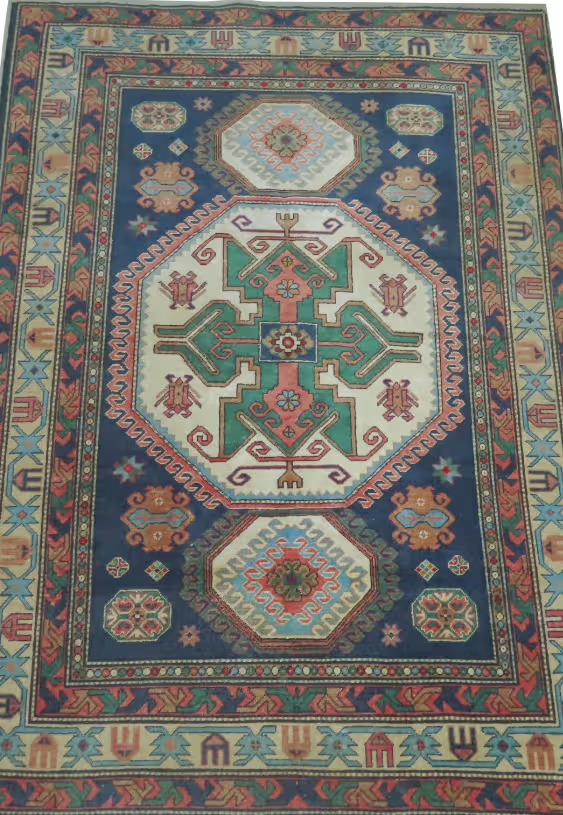
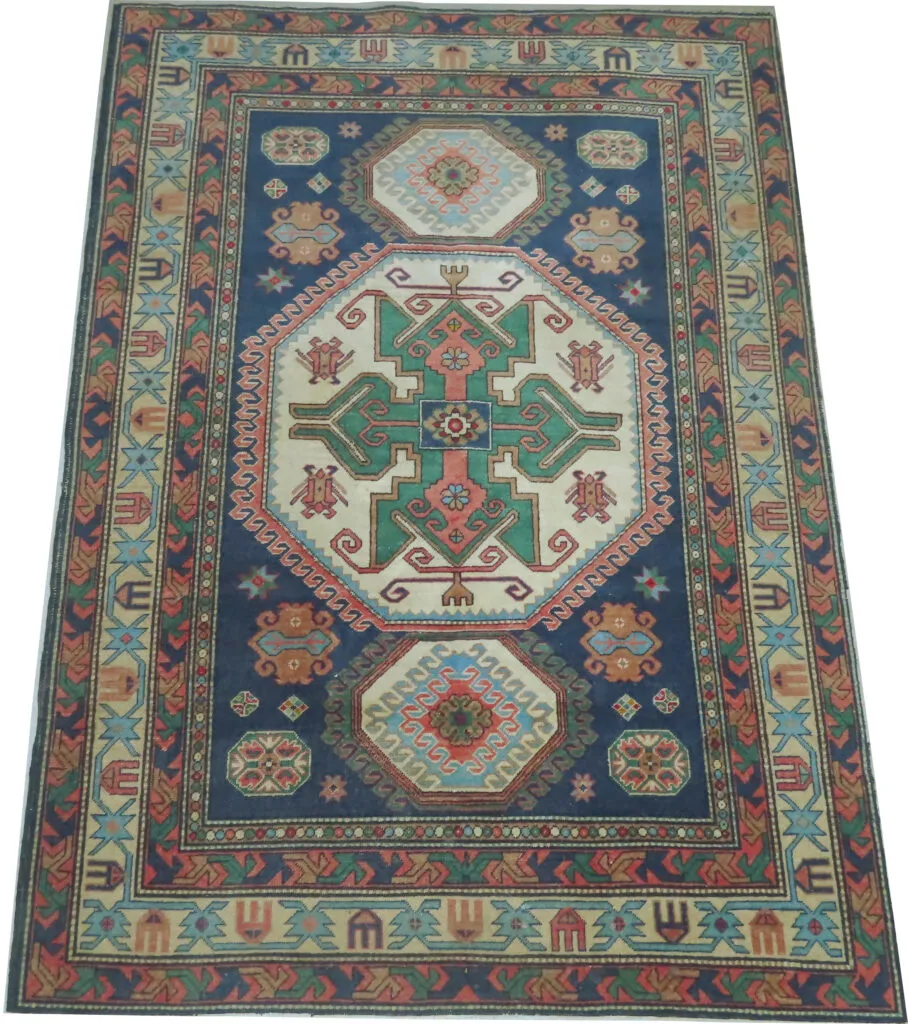
One of the most striking features of Caucasian rugs is their geometric designs. Unlike Persian or Turkish rugs, which often feature floral motifs, Caucasian rugs are characterized by angular shapes, stars, crosses, medallions, and stylized animal or human figures.
The color palette of these rugs is another defining trait. Traditional Caucasian rugs use natural dyes, resulting in deep and rich hues of red, blue, ivory, green, and yellow. The use of high-quality wool, dyed with vegetable-based pigments, gives them a distinctive brightness that remains vibrant over time.
In terms of weaving techniques, most Caucasian rugs are hand-knotted with a symmetrical (Turkish) knot, contributing to their durability. The foundation is typically made of wool, sometimes combined with cotton, and the weave is relatively coarse compared to Persian rugs, giving them a more textured appearance.
Each sub-region within the Caucasus has its own unique rug-making traditions. For example, Shirvan rugs are known for their fine weave and detailed patterns, while Kazak rugs feature larger, more abstract motifs with bold colors. Dagestan and Kuba rugs often display intricate, small-scale designs with highly detailed borders.
Caucasian rugs are not just decorative items but also reflect the history, culture, and artistic heritage of the people who create them. Their timeless beauty and craftsmanship make them highly valued by collectors and interior designers alike.

Caucasian rugs are among the most distinctive and sought-after handwoven carpets, originating from the Caucasus region, which lies between the Black Sea and the Caspian Sea. These rugs are known for their bold geometric patterns, vibrant colors, and exceptional craftsmanship.


One of the most striking features of Caucasian rugs is their geometric designs. Unlike Persian or Turkish rugs, which often feature floral motifs, Caucasian rugs are characterized by angular shapes, stars, crosses, medallions, and stylized animal or human figures. 


The color palette of these rugs is another defining trait. Traditional Caucasian rugs use natural dyes, resulting in deep and rich hues of red, blue, ivory, green, and yellow. The use of high-quality wool, dyed with vegetable-based pigments, gives them a distinctive brightness that remains vibrant over time.

In terms of weaving techniques, most Caucasian rugs are hand-knotted with a symmetrical (Turkish) knot, contributing to their durability. The foundation is typically made of wool, sometimes combined with cotton, and the weave is relatively coarse compared to Persian rugs, giving them a more textured appearance.

Each sub-region within the Caucasus has its own unique rug-making traditions. For example, Shirvan rugs are known for their fine weave and detailed patterns, while Kazak rugs feature larger, more abstract motifs with bold colors. Dagestan and Kuba rugs often display intricate, small-scale designs with highly detailed borders.

Caucasian rugs are not just decorative items but also reflect the history, culture, and artistic heritage of the people who create them. Their timeless beauty and craftsmanship make them highly valued by collectors and interior designers alike.

Leave a Reply

Your email address will not be published. Required fields are marked *