

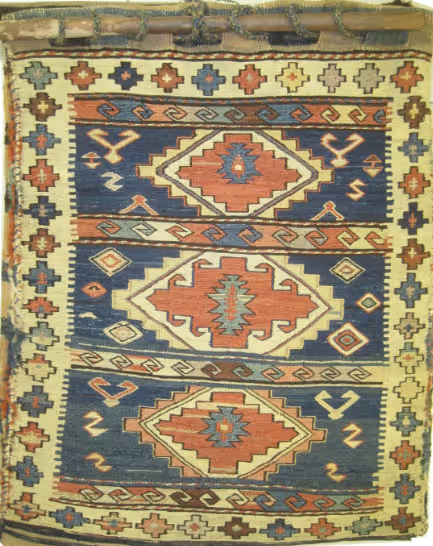
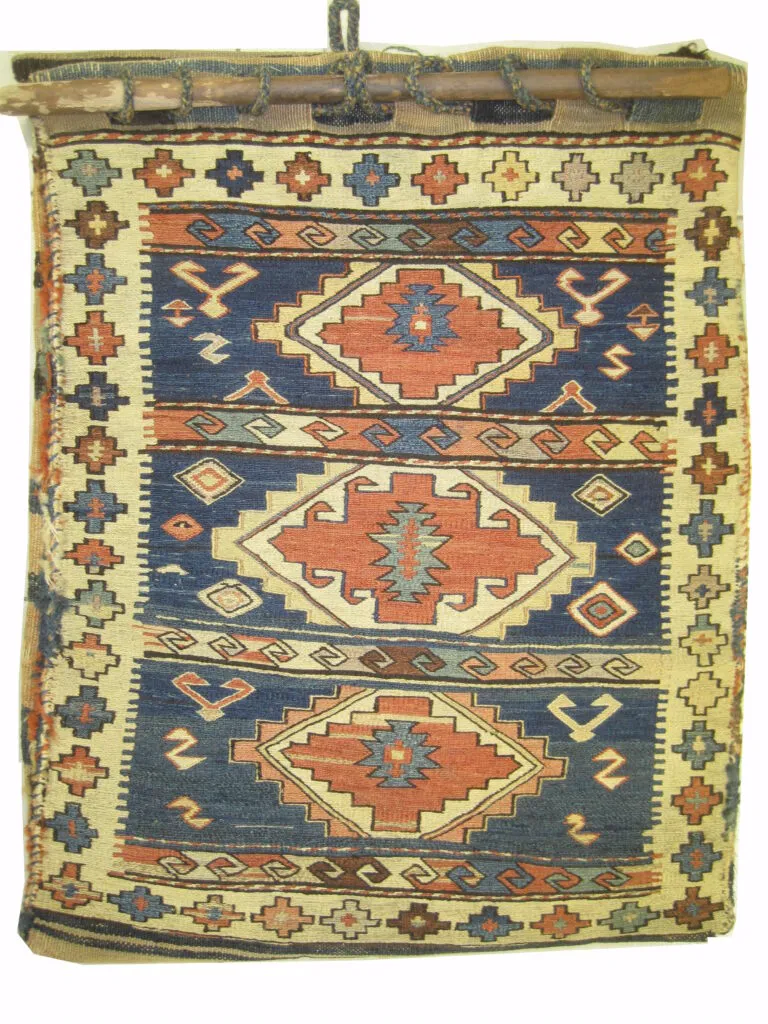
Kilims are more than just rugs—they’re woven stories. These flat-woven textiles, created without knots, are known for their bold patterns, cultural symbolism, and utilitarian charm. Across regions—from Persia to the Caucasus, Anatolia to the Balkans—kilims reflect the soul of the people who wove them.

We explore the characteristics of kilims from five major traditions: Persian, Caucasian, Turkmen, Turkish, and European.
- Persian Kilims – A Blend of Elegance and Symbolism:
Iran has long been a centre of textile artistry.
Persian kilims often feature:- Sharp, angular designs such as stars, medallions, and hooked polygons
- Complex geometric or floral motifs
- Subtle color palettes using natural dyes
- Symbolic patterns representing fertility, protection, and nature.
- Famous weaving centres include Senneh and Qashqai. Senneh kilims are known for their tight weave and intricate precision, while tribal kilims like those of the Qashqai are more expressive and richly colorful.
- Caucasian Kilims – Tribal Boldness and Sharp Geometry:
The Caucasus region—stretching from Armenia and Azerbaijan to Georgia—is renowned for bold and vibrant kilims.
Key features include:- Sharp, angular designs such as stars, medallions, and hooked polygons
- Strong contrast between deep reds, blues, and ivory
- Totemic symbols rooted in ancient tribal beliefs
- Caucasian kilims often have a rugged, tribal quality that appeals to collectors and designers looking for powerful visual impact.
- Turkmen Kilims – Nomadic Simplicity and Tribal Identity:
Woven by nomadic tribes across Turkmenistan and northern Iran, Turkmen kilims are deeply tied to tradition.
They often exhibit:- Earthy color schemes: deep reds, browns, and blacks
- Repeating tribal guls (octagonal medallions)
- Utility: used as tent dividers, saddlebags, and floor coverings
Unlike their piled carpet cousins, Turkmen kilims often serve practical roles in everyday tribal life while carrying symbolic and ancestral meaning.

Leave a Reply